
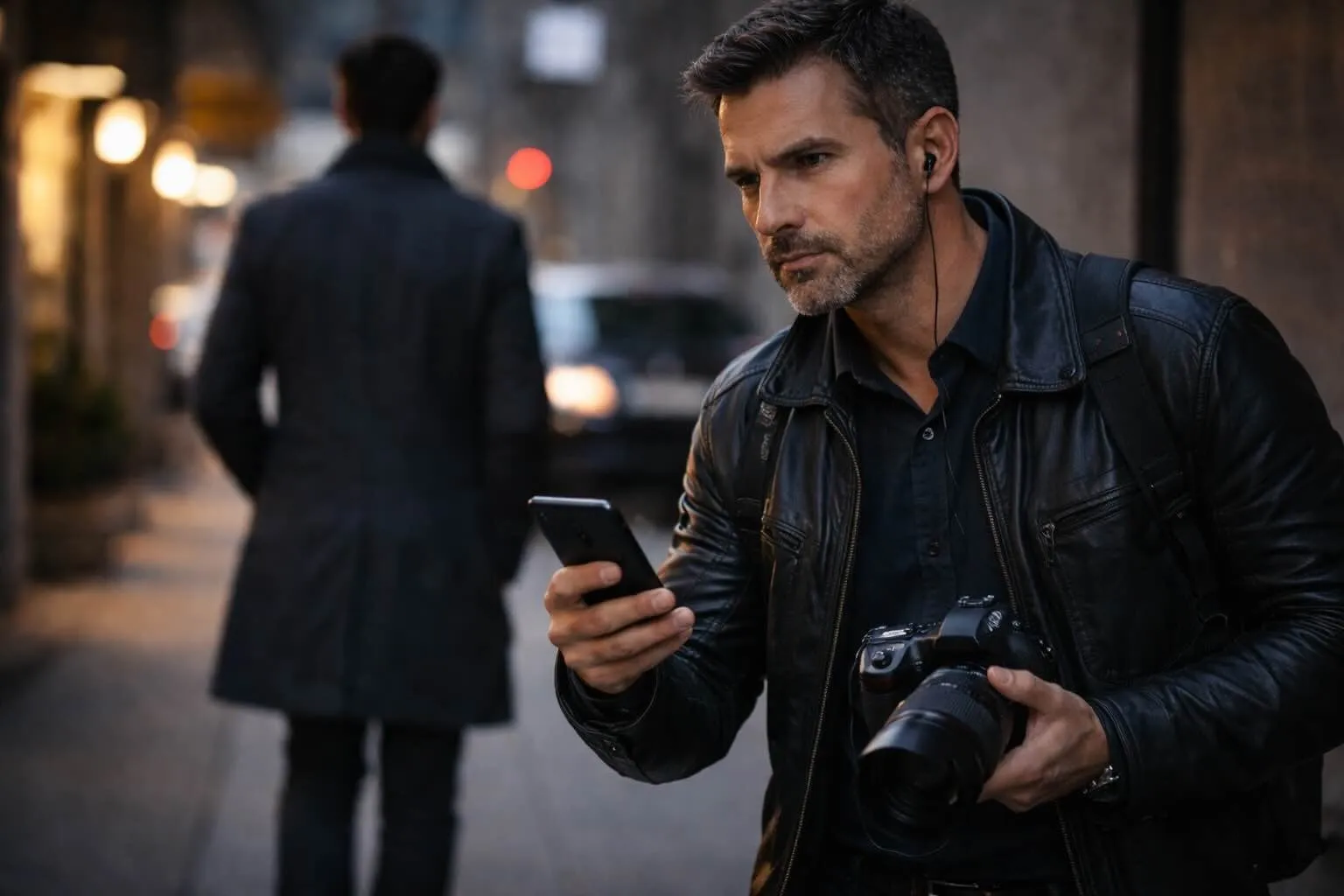
When is it legal for a private investigator to conduct surveillance?
Surveillance is one of the most well-known activities associated with the figure of the private investigator. In the collective imagination, it represents the investigative technique par excellence, used to document movements, meetings, and behaviors of a subject under investigation.
In reality, investigative surveillance is an activity regulated by specific legal norms. It cannot be carried out freely by anyone but exclusively by authorized private investigators and within the limits established by the regulations.
In Italy, the regulatory framework governing investigative surveillance is mainly constituted by Article 134 of the Consolidated Law on Public Security (TULPS) and by Ministerial Decree 269/2010, which regulates the activities of private investigation agencies.
Understanding when surveillance is legal is essential both for professionals in the field and for those who intend to hire a private investigator.
Investigative surveillance: what it means
Surveillance is an investigative technique that involves discreetly following a subject to document their:
- movements
- meetings
- daily activities
- frequentations
The objective of the private investigator's surveillance is to gather informational elements and evidence useful for the protection of a right in court.
This activity is often used in investigations related to:
- marital infidelity
- employee monitoring for false sickness
- unfair competition
- contractual violations
- defensive investigations
Surveillance represents a form of dynamic observation, that is, an investigative activity that follows the subject in their movements.
When surveillance is legal
Surveillance is legal when certain fundamental conditions set by the regulations are met.
In particular:
- must be carried out by an authorized private investigator
- must be aimed at protecting a right
- must take place in public places or places open to the public
- must not violate the privacy or the dignity of the person
A licensed private investigator can therefore follow a person in public places to document behaviors relevant to an investigation.
This activity falls within the investigative techniques allowed for private investigators.
The role of art.134 TULPS in private investigations
Article 134 of the Consolidated Law on Public Security stipulates that private investigative activity can only be carried out by subjects authorized by the Prefect.
This means that investigative surveillance is legal only if carried out by a private investigator with a prefectural license or by an operator working for an authorized investigative institute.
Those who carry out surveillance activities without authorization may commit the crime of unauthorized practice of investigative activity.
DM 269/2010 and the investigative observation activity
Ministerial Decree 269/2010 represents the main regulation governing the organization of investigative agencies and the operational activities of private investigators.
The decree establishes that the investigative activity may include:
- static observation
- dynamic observation
- surveillance activity
- information gathering
Surveillance therefore falls within the scope of dynamic observation and is a fully legitimate investigative technique if carried out in compliance with the regulations.
Static observation and dynamic observation
Investigative inquiries are generally based on two main operational methods.
Static observation
Static observation involves monitoring a specific location from a fixed position to document relevant behaviors.
This activity allows you to record:
- entrances and exits from a dwelling
- frequentations
- schedules and habits
Dynamic observation
Dynamic observation involves following the investigated subject during their movements.
This investigative technique is what is commonly referred to as surveillance.
The surveillance by the private investigator can be carried out:
- on foot
- with motor vehicles
- with more coordinated operators
Does the private investigator's surveillance produce evidence?
One of the most significant aspects of investigative activity concerns the possibility of using the evidence collected in court.
Private investigator surveillance allows for documenting behaviors through:
- photographs
- video
- Investigative reports
The investigative report can be filed in court and the investigator can be called to testify about the observed facts.
Numerous decisions by Italian courts have recognized the absolute validity of evidence collected by authorized private investigators.
When surveillance becomes illegal
Surveillance can become illegal when the limits set by law are exceeded.
For example when:
- is carried out by unauthorized individuals
- illegal control tools are being used
- the private sphere of the person is violated
- intrusions into private places are carried out
For this reason, it is essential to rely exclusively on authorized private investigators.
Why turn to a licensed private investigator
Relying on a licensed private investigator means obtaining investigations conducted in compliance with regulations.
A professional investigator guarantees:
- prefectural license
- legitimate investigative activities
- collection of evidence admissible in court
- compliance with privacy regulations
This is particularly important when investigations need to be used in civil or criminal proceedings.
Conclusions
The private investigator's surveillance is a legitimate investigative technique when conducted in compliance with current regulations.
Article 134 of the TULPS and DM 269/2010 clearly establish that private investigations can only be conducted by authorized professionals and aimed at protecting a right.
When carried out correctly, surveillance represents a fundamental investigative tool for gathering evidence and documenting relevant behaviors in family, corporate, or judicial contexts.
FAQ
Can a private investigator follow someone?
Yes, a licensed private investigator can follow someone in public places or places open to the public to document behaviors relevant to an investigation.
Does surveillance violate privacy?
Surveillance does not violate privacy if it is conducted in public places and within the limits set by law.
Are the evidence collected through surveillance valid in court?
Yes, the evidence collected by authorized private investigators can be used in legal proceedings.
How much does an investigative surveillance cost?
The cost depends on the duration of the investigation, the number of operators involved, and the complexity of the investigative activity.
You might also be interested in:
Private investigator evidence: when it is admissible in court
What a private investigator can do: limits and activities permitted by law
How much does a private investigator cost: prices, rates, and factors that influence the cost
Private Investigator: regulations, DM 269/2010, requirements and operations
Comments
Be the first to leave a message.
Thanks, your message is live.
Thanks, your message is awaiting moderation.