
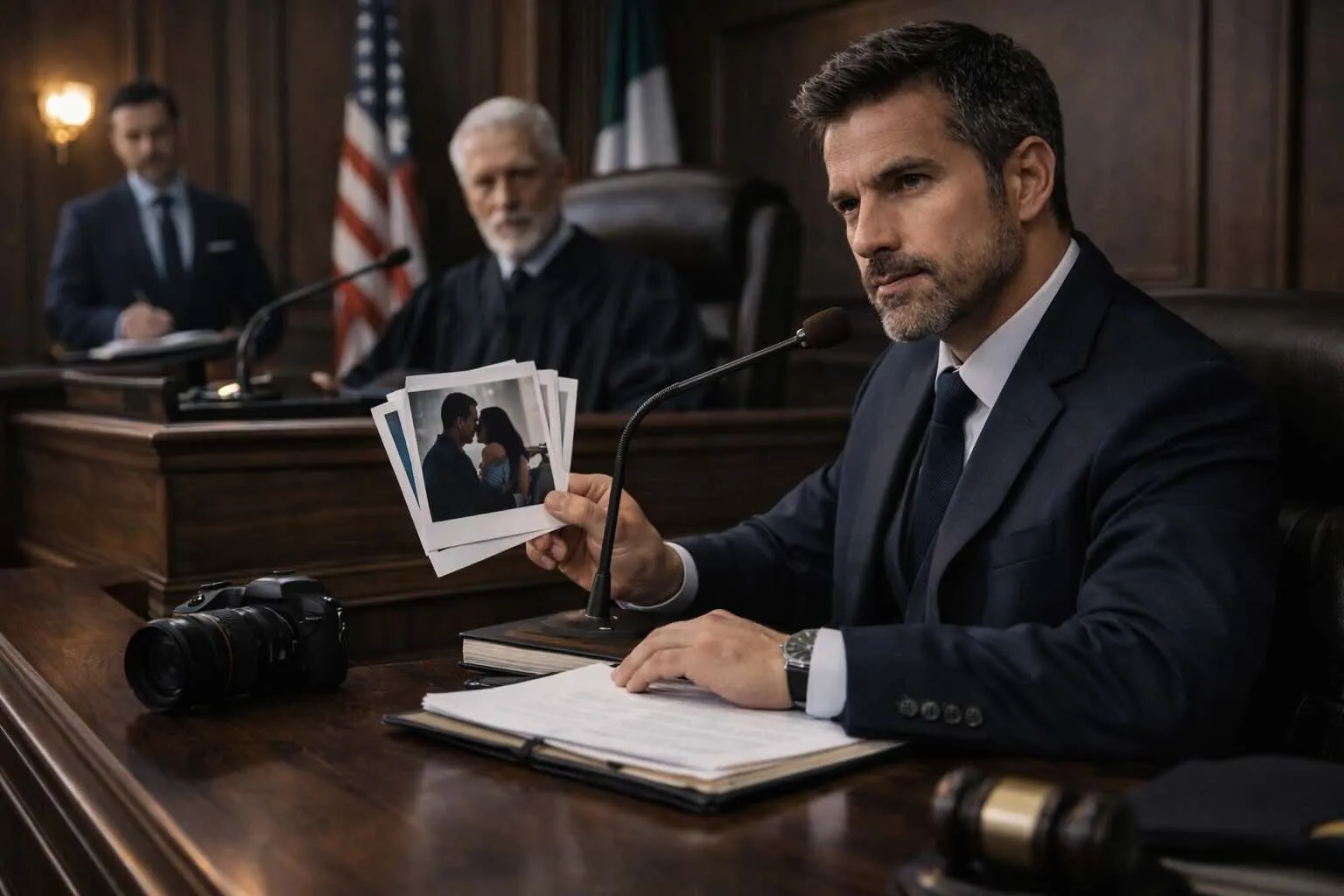
Are the private investigator's findings admissible in court?
Introduction
One of the most frequently asked questions when resorting to private investigations concerns the validity of the evidence collected. Many people wonder if the private investigator's evidence can be used in court and what value it has in a judicial proceeding.
In Italy, jurisprudence has repeatedly recognized the legitimacy of evidence collected by authorized private investigators, provided that the investigative activities are conducted in compliance with the law.
The investigative reports, photographs, and videos collected during an investigation can indeed constitute relevant evidence in civil, criminal, and labor disputes.
The role of the private investigator in evidence gathering
The private investigator carries out an activity of gathering information and documentation aimed at protecting a right.
Private investigations can be used in numerous judicial contexts, including:
- causes of separation and divorce
- labor disputes
- civil proceedings
- defensive investigations in criminal proceedings
In these cases, the private investigator documents behaviors and circumstances that may be relevant for the judge's decision.
The investigative report
The main document produced by the private investigator is the investigative report.
The investigative report contains:
- description of the investigative activities carried out
- chronological reconstruction of the observed events
- photographic or video documentation
- indication of the places and times of the observations
This document often represents the heart of the investigative activity and is what is filed in the judicial proceeding.
Evidentiary value of the investigative report
The investigative report has the value of documentary evidence in the trial.
The judge can assess the content of the report along with the other evidence present in the proceedings.
A particularly important element is the possibility of calling the private investigator to testify in court to confirm what is reported in the investigative report.
The investigator's testimony strengthens the evidential value of the activities carried out during the investigation.
Photographs and videos collected by the private investigator
During private investigations, it is common to collect photographic and video documentation.
These elements can be used as evidence when:
- they were collected in public or publicly accessible places
- do not violate privacy regulations
- are relevant to the dispute
The images collected by the investigator can help demonstrate behaviors relevant to the case.
Investigative evidence in labor disputes
One of the areas in which investigative evidence is used most frequently is labor law.
Private investigations are often employed to ascertain:
- false illness or injury
- breaches of contractual obligations
- unfair competition
- abuse of Law 104/92
Jurisprudence has recognized the validity of evidence collected by private investigators in disciplinary or judicial proceedings.
Investigative evidence in family cases
Even in family cases, private investigations can play an important role.
The evidence collected by a private investigator can be used in proceedings related to:
- separation
- divorce
- child custody
- review of separation or divorce conditions
In particular, investigations for marital infidelity represent one of the most requested investigative activities.
When investigative evidence can be challenged
Evidence collected by a private investigator can be challenged when the investigative activity does not comply with current regulations.
For example when:
- the investigations are conducted by unauthorized individuals
- the privacy law is violated
- illegal control tools are being used
- intrusions into private places are carried out
For this reason, it is essential to rely exclusively on authorized private investigators.
Why choose a licensed private investigator
Relying on a licensed private investigator ensures that investigations are conducted in compliance with the law.
A professional investigator operates with:
- prefectural license
- legitimate investigative methodologies
- collection of evidence admissible in court
- compliance with privacy regulations
This is essential to ensure that the collected evidence can be effectively used in the judicial proceedings.
Conclusions
The evidence collected by a licensed private investigator can play an important role in legal proceedings.
Investigative reports, photographs, and videos can constitute relevant evidence, especially when the investigator is called to testify about the observed facts.
For this reason, it is essential to rely on authorized professionals who operate in compliance with current regulations.
FAQ
Are the private investigator's findings admissible in court?
Yes, evidence collected by licensed private investigators can be used in legal proceedings.
Does the investigative report have legal value?
The investigative report constitutes documentary evidence that can be evaluated by the judge along with other elements of the trial.
Can a private investigator testify in court?
Yes, the private investigator can be called to testify about the facts observed during the investigative activity.
Are the private investigator's photographs valid as evidence?
Yes, the photographs collected during an investigation can be used as evidence if they were taken in compliance with the law.
You might also be interested in:
What a private investigator can do: limits and activities permitted by law
How much does a private investigator cost: prices, rates, and factors that influence the cost
When is the surveillance by a private investigator legal: what the law says
Private Investigator: regulations, DM 269/2010, requirements and operations
Comments
Be the first to leave a message.
Thanks, your message is live.
Thanks, your message is awaiting moderation.