
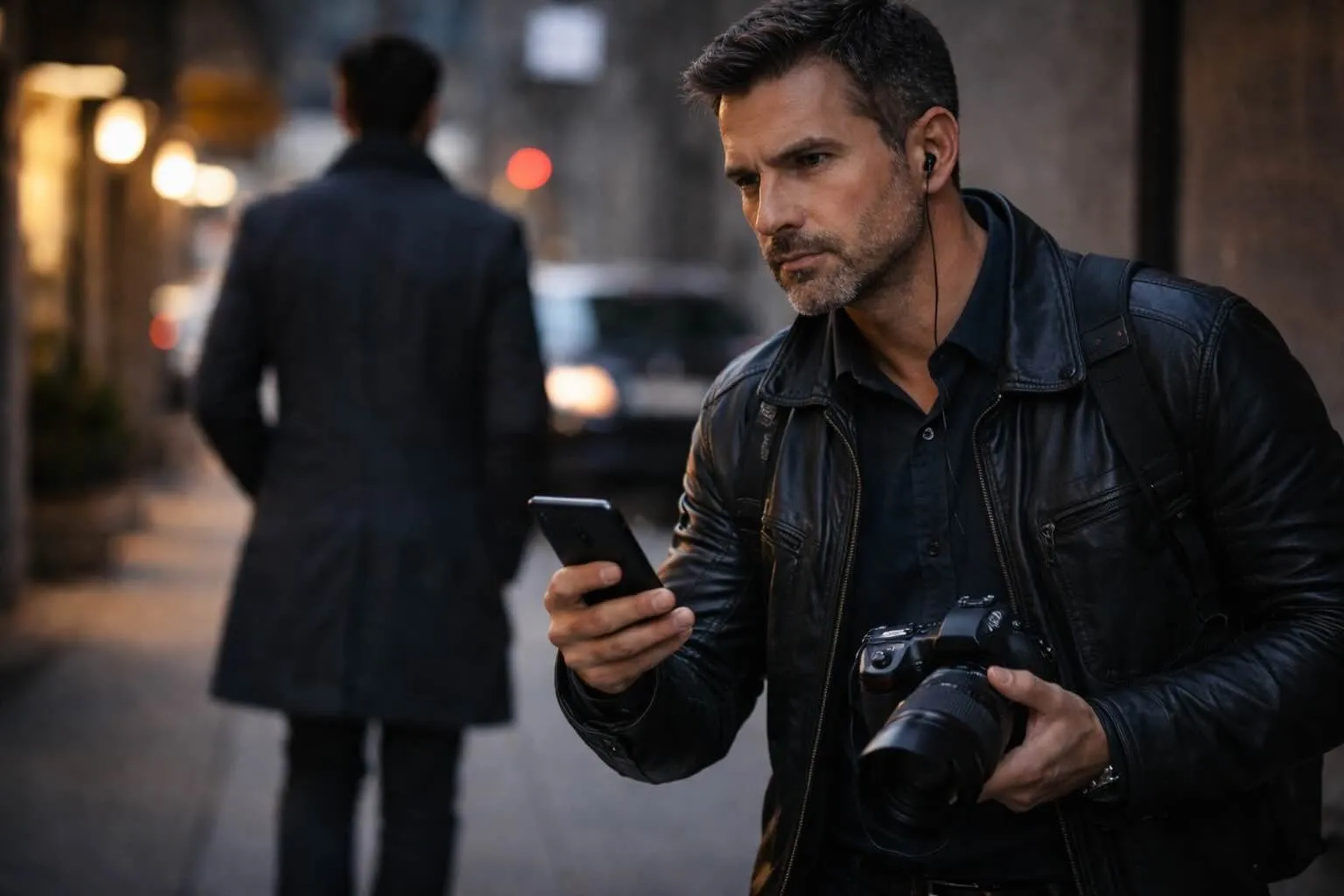
What a private investigator can do: activities and legal limitations
Introduction
Many people wonder what a private investigator can do and what the actual powers of this professional figure are. The collective imagination often associates the private investigator with limitless investigative methods, but in reality, investigative activity is regulated by precise legal norms.
In Italy, the activity of a private investigator is mainly regulated by Article 134 of the Consolidated Law on Public Security and by Ministerial Decree 269/2010. These regulations establish which investigative activities are allowed and which are prohibited.
Understanding what a private investigator can legally do is essential to avoid misunderstandings and to rely on licensed professionals.
Who can perform private investigator activities
Before analyzing what a private investigator can do, it is important to clarify who can practice this profession.
Private investigative activity can be carried out exclusively by subjects authorized by the Prefecture pursuant to art.134 TULPS.
To obtain the license, it is necessary to have:
- moral requirements of reliability
- specific bachelor's degree
- specific professional training
- experience in the investigative field
- an authorized organizational structure
Only authorized private investigators can carry out investigative activities on behalf of private clients or companies.
What can a private investigator do
A licensed private investigator can carry out various investigative activities aimed at protecting a right.
Among the main permitted activities are:
- Surveillance and observation of people
- collection of information on relevant behaviors
- photographic and video documentation
- verification of attendance and movements
- investigative activities for companies
- investigations on behalf of lawyers
The private investigator always operates based on a formal assignment given by the client.
Surveillance and investigative observation
Surveillance is one of the most commonly used investigative techniques by private investigators.
This activity consists of following a person to document their movements and behaviors.
Private investigator surveillance is legal when:
- occurs in public or publicly accessible places
- is carried out by authorized investigators or their employees reported to the Prefecture
- is aimed at protecting a right
Surveillance is part of the dynamic observation activities provided for by the regulations on private investigations.
Surveillance and static observation
A private investigator can conduct surveillance and static observation activities.
This activity involves monitoring a specific location to document:
- entries and exits
- frequentations
- schedules and habits
Static observation is often used in combination with dynamic observation to reconstruct the behaviors of the investigated subject.
Private investigations in the family sphere
One of the most frequent areas of investigative activity concerns investigations in the family sphere.
Among the most requested investigations are:
- investigations for marital infidelity
- verification of dangerous associations of the minor son
- investigations into behaviors incompatible with child custody
These investigations are aimed at gathering evidence that can be used in separation or divorce proceedings.
Corporate investigations
A private investigator can carry out investigative activities on behalf of companies.
Corporate investigations primarily concern:
- employee monitoring for false illness or injury
- investigations on unfair competition
- breach of contractual obligations
The collected evidence can be used in disciplinary proceedings or labor disputes.
Defensive investigations on behalf of the lawyer
Private investigators can also carry out investigative activities on behalf of a lawyer as part of defense investigations.
These activities are provided for by the code of criminal procedure and allow for the collection of useful elements for the defense of the client.
Defensive investigations may include:
- Informal talks with people potentially informed about the facts
- search for witnesses
- investigative assessments
- documentation of relevant behaviors
What a private investigator cannot do
It is equally important to clarify what a private investigator cannot do.
Activities such as are prohibited:
- telephone interceptions
- Unauthorized access to computer systems
- intrusion into private homes
- illegal installation of monitoring tools
A private investigator must always operate in compliance with the law and privacy regulations.
Are the pieces of evidence collected by the private investigator valid?
The evidence collected by a licensed private investigator can be used in court.
Among the most commonly used pieces of evidence are:
- Investigative reports
- photographs
- video
- investigator's testimony
Private investigations therefore represent an important tool for the protection of rights in court.
Why rely on a licensed private investigator
Relying on a licensed private investigator ensures that investigations are conducted in compliance with current regulations.
A professional investigator operates with:
- prefectural license
- legitimate investigative methodologies
- collection of evidence admissible in court
- respect for privacy
This is essential to prevent the collected evidence from being challenged.
Conclusions
Understanding what a private investigator can do helps distinguish between legitimate investigative activities and behaviors prohibited by law.
Italian regulations clearly establish that private investigations can only be conducted by authorized professionals and must always be aimed at protecting a right.
When conducted correctly, investigative activity is an effective tool for gathering evidence and documenting relevant behaviors in family, corporate, or judicial contexts.
FAQ
Can a private investigator follow someone?
Yes, a licensed private investigator can follow someone in public or publicly accessible places to document relevant behaviors.
Can a private investigator check someone's phone?
No. Accessing phones, communications, or computer systems without authorization constitutes a crime.
Can a private investigator take photographs?
Yes, a private investigator can take photographs or videos in public places when the activity is aimed at gathering evidence.
Are the private investigator's findings admissible in court?
Yes, investigative reports and documentation collected by licensed investigators can be used in legal proceedings.
You might also be interested in:
Private investigator evidence: when it is admissible in court
How much does a private investigator cost: prices, rates, and factors that influence the cost
When is the surveillance by a private investigator legal: what the law says
Private Investigator: regulations, DM 269/2010, requirements and operations
Comments
Be the first to leave a message.
Thanks, your message is live.
Thanks, your message is awaiting moderation.