
In the context of investigations conducted by authorized private investigators, technology represents a valuable ally to improve operational effectiveness.
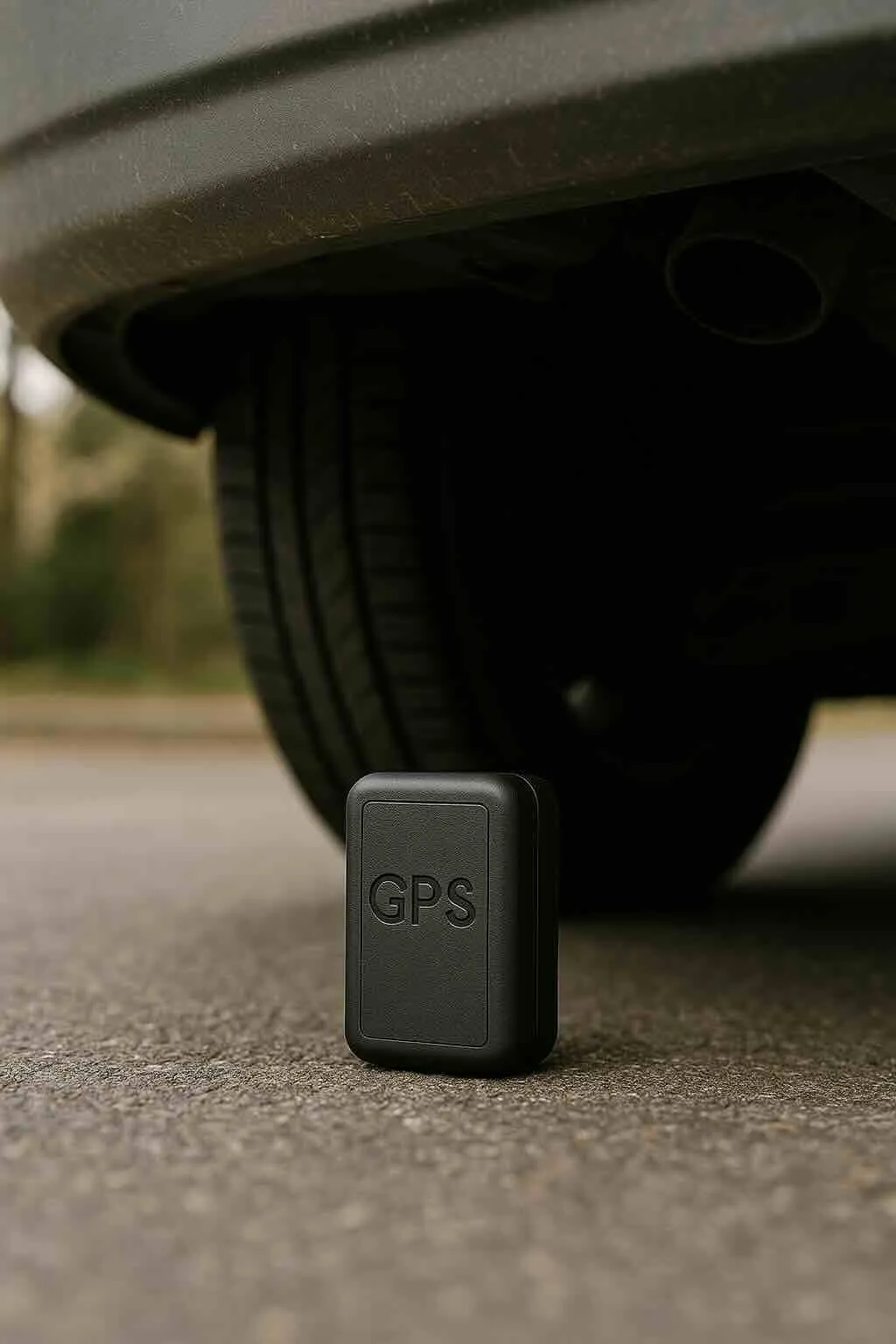
Among the technical tools frequently used today is the GPS, or the satellite positioning system.
But is its use by the private investigator really lawful? And what are the limits and conditions set by current regulations?
The regulatory framework: DM 269/2010 and Operational Handbook of the Ministry of the Interior
The DM 269/2010, which establishes the requirements for carrying out private investigation activities, literally states:
<< For the performance of the activities referred to in points a.I), a.II), a.III), and a.IV), the authorized subjects may, among other things, carry out, also through their collaborators reported pursuant to the TULPS: activities of static and dynamic observation (so-called shadowing)also throughelectronic instruments, video/photographic recording, inspection, collection of information extracted from freely accessible documents also in public registers, interviews with people also through telephone conversations, collection of information obtained directly at the client's premises.>>
Thanks to the Operational Handbook drafted by the Ministry of the Interior (Circular 557/PAS/U/004935/10089.D(1)Reg), it has been clarified that the activity of surveillance carried out also through electronic tracking with GPS equipment fully falls within the competencies of the private investigator.
In the document it reads verbatim:
“…the provision under examination then overcomes the issue related to the lack of clear evidence of the acts that can be carried out by investigators, particularly concerning some activities not fully defined by the establishing norms, such as surveillance (including by means of electronic tracking with GPS devices), stakeouts, and photographic or cinematographic recordings, which result in atypical acts.”
This clarification expressly legitimizes the use of the satellite locator as a tracking technique, clarifying that it is neither interception nor an activity reserved for the judiciary or law enforcement.
GPS as a support for tracking
The use of GPS, therefore, is allowed exclusively for tracking purposes, an activity that can be carried out by the authorized private investigator or their collaborators reported to the Prefecture in accordance with the TULPS.
It does not replace direct observation, but integrates and enhances it, allowing to:
• Monitor vehicle movements in real time;
• Coordinate field interventions with multiple operators;
• Collect useful data for the temporal reconstruction of movements;
• Increase operational effectiveness in dynamic contexts.
The established case law of the Court of Cassation has also determined that:
"The localization through the satellite tracking system of a person's movements constitutes a stalking activity and cannot be equated with the interception of communications or conversations."
(Cass. Pen., Sez. VI, sent. n. 15396/2008; Sez. V, n. 9667/2010)
When is the use of GPS legitimate
The use of a GPS tracker is considered an atypical but lawful act if it falls within a regularly assigned investigative task. It is important that:
• The activity is carried out by an authorized investigator with a Prefectural license (beware of unauthorized individuals!);
• The surveillance with GPS support is an integral part of the investigative activity;
• The device is installed on vehicles or assets connected to the person under investigation, and only for the time strictly necessary to execute the mandate.
Conclusions
The use of GPS by the private investigator is expressly legitimized by the regulations and administrative practice of the Ministry of the Interior. It is a tracking technique, not interception, and as such falls within the activities allowed as part of an authorized investigative assignment.
Relying on a regularly authorized investigative institute ensures not only the quality of the service but also full compliance with regulatory provisions, avoiding risks associated with improper use of sophisticated technologies.
- Ministerial Decree 269/2010
- Operational Handbook Ministry of the Interior
Comments
Be the first to leave a message.
Thanks, your message is live.
Thanks, your message is awaiting moderation.