
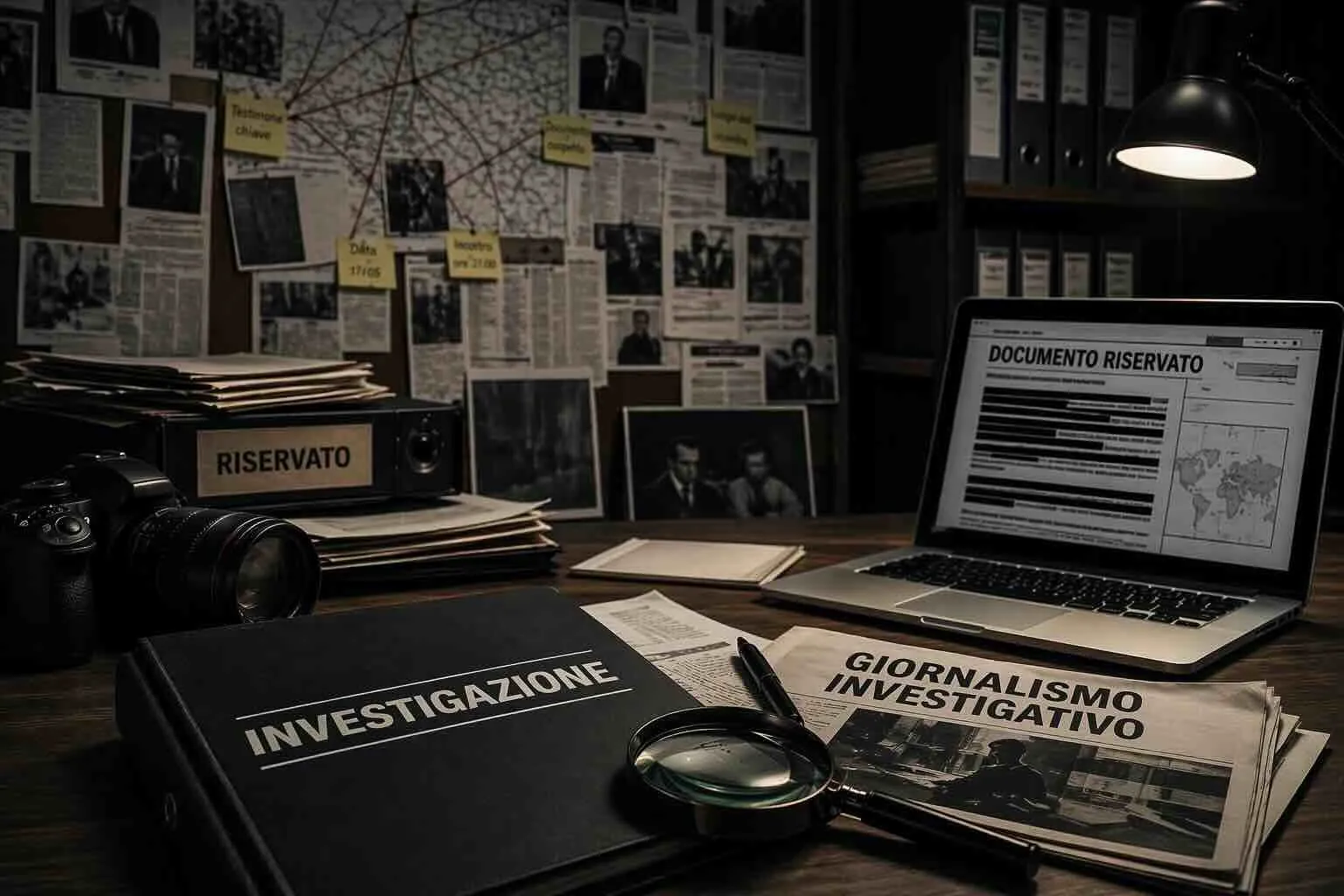
Investigative journalism and private investigations represent two distinct but increasingly interconnected fields, united by a central goal: bringing hidden facts to light, verifying information, and constructing a narrative based on objective and verifiable evidence.
In a context characterized by information overload, misinformation, and increasing social complexity, both activities assume a strategic role for businesses, institutions, and citizens.
What is investigative journalism
Investigative journalism is an advanced form of journalistic activity that stands out for its depth, method, and autonomy.
It doesn't just report news, but constructs it through:
• systematic collection of sources
• documentary analysis
• cross-referencing of data
• Independent verification of the information
The goal is to reveal facts of public interest often concealed, such as corruption, fraud, abuse of power, or systemic inefficiencies.
Main features
• Editorial independence
• Rigorous method
• Protection of sources
• Purposes of public interest
What are private investigations?
Private investigations are professional activities carried out by individuals authorized by the Prefecture (private investigators) with specific purposes, generally related to individual or business needs.
They operate in compliance with the current regulations and with well-defined limits.
Operational areas:
• corporate investigations (absenteeism, unfair competition, professional disloyalty, etc.)
• private investigations (child custody, marital infidelity, etc..)
• private investigations (child custody, marital infidelity, etc..)
• insurance investigations (insurance fraud, etc.)
• defensive investigations (collection of evidence to be used in criminal proceedings)
Unlike journalism, the private investigator works on direct assignment from the client and produces evidence usable in court.
Differences between investigative journalism and private investigations
Purpose
• Investigative journalism: public interest
• Private investigations: private or business interest
Commissioning
• Journalist: editorial office or independent initiative
• Investigator: specific client
Use of information
• Journalism: publication and dissemination
• Investigations: legal use
Points of contact
Despite the differences, there are several areas of overlap:
• use of information gathering techniques
• cross-analysis of data
• verification of sources
• attention to evidentiary documentation
In some complex contexts, such as investigations into corporate fraud or financial scandals, the two figures can operate in a similar manner.
Digital evolution: a common ground
The advent of digital technology has profoundly transformed both sectors.
Today, both investigative journalism and private investigations use advanced tools such as:
• OSINT (Open Source Intelligence)
Social media analysis
• data analysis
Legal and ethical aspects
Both activities operate within well-defined regulatory boundaries:
• respect for privacy
• proper data handling, one for journalistic purposes, the other for legal purposes.
For the private investigator, the regulatory framework is particularly stringent, with obligations related to licenses and authorizations.
The journalist operates within ethical codes and press regulations.
Conclusion
Investigative journalism and private investigations represent two different but complementary tools in the search for truth. The former acts in the collective interest, the latter protects specific interests, but both share method, rigor, and responsibility.
Comments
Be the first to leave a message.
Thanks, your message is live.
Thanks, your message is awaiting moderation.